Taking Hwange’s music beyond the elephants and safari trails

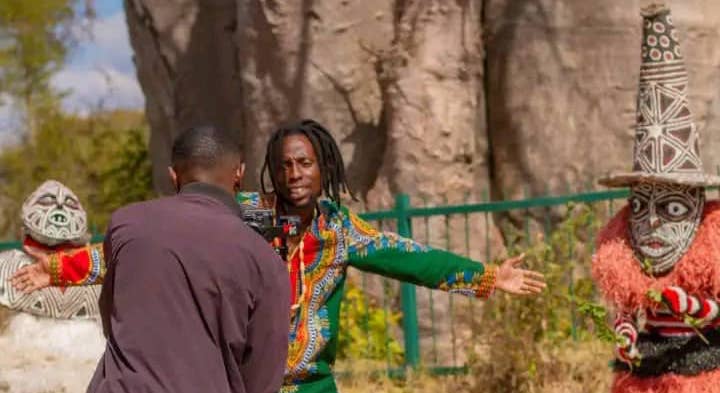
Hwange is a name that immediately brings to mind elephants, wildlife and safari adventures. Yet beyond its reputation as one of Zimbabwe’s leading tourism destinations, the town has a musical identity that is slowly finding its way into the national conversation.
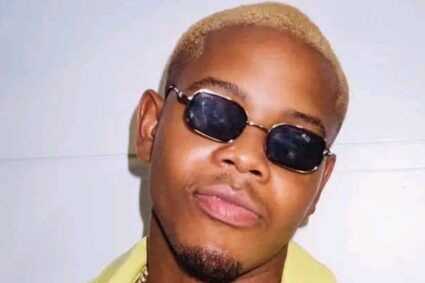
Among the artists determined to change that narrative is J Tonga, whose music draws from Hwange’s rich cultural diversity, languages and everyday experiences.
Singing in Tonga, Ndebele, English, Chinyanja and Shona, the artist sees music as a way of bringing different communities together while giving Hwange a voice beyond its tourism attractions.
His nomination for Outstanding Alternative Music at the Bulawayo Arts Awards (BAA) is another opportunity to bring attention to a music scene that he believes deserves greater recognition.
However, the journey has not been without challenges.
Limited promotional opportunities, difficulties securing bookings and an industry largely concentrated in bigger cities continue to make the journey difficult for artists based in smaller towns.
In this conversation with My Kasi Magazine, J Tonga discusses representing Hwange through music, the importance of multilingual songwriting, the challenges facing local musicians and his plans to create more opportunities for emerging talent.
TR: Hwange is known worldwide for its elephants, Victoria Falls nearby and safaris, but rarely for its music. How does it feel to be putting Hwange on the map as an artist, not just as a tourist destination?
JT: It is an honour as much as it is a duty. I feel obligated as an artist to be the voice of Hwange and tell its story from a different perspective.
It comes with its own challenges because people know Hwange for its animals. Shifting their minds towards the music aspect is not easy, but surely we are winning slowly.
TR: You sing in Tonga, Ndebele, English, Chinyanja and Shona in the same catalogue. Was that a deliberate choice to represent Hwange’s mix of cultures, or did it happen naturally from growing up there?
JT: As a Hwangeian (Mubhoni), it is very important to represent every dialect without being selective. This is because of the different groups that live in Hwange. A lot of languages are spoken here, so it only feels right to represent most of them in song as a way of uniting the community.
Again, it is very hard for someone born in Hwange not to speak at least four or five languages because you hear them on a daily basis.
TR: What makes Hwange music sound different from Bulawayo music? Is there a specific rhythm, instrument, story or way of singing that only Hwange has?
JT: I believe Hwange music is different and unique because of its originality. Bulawayo music is great, we cannot deny that, but I feel some of it sounds more South African than Zimbabwean.
In Hwange, you cannot sing Tonga or Nambya like anyone else because there is no other reference point. You are bringing something fresh and original.
TR: You are nominated for Outstanding Alternative Music at the Bulawayo Arts Awards. What does alternative mean to you, and do you think Hwange artists are forced into that category because they do not fit mainstream music?
JT: Alternative simply means music apart from what most people are listening to. Which other music or artist is worth listening to?
I do not believe we are forced into that category. People already have what they like, which is mostly mainstream music. When you introduce something new, people sample it and you see how they receive it. That gives you room and the zeal to work on things and how you present your music to your audience.
TR: When the nomination was announced, how did people back home in Hwange react? Give us one moment that showed you what this meant to them.
JT: I received calls, people mentioned it on their WhatsApp statuses, Facebook and other platforms.
I woke up to messages in the morning, a pile of them. That is how I understood the joy and appreciation people had for my music.
TR: Many people say Matabeleland North is treated as Zimbabwe’s tourism capital, so the arts get ignored while lodges and parks receive most of the attention and money. Have you felt that personally as an artist trying to get bookings, airplay or funding?
JT: It is very true. Some people still think Hwange has nothing to offer musically, so we are here to prove them wrong.
It is hard getting booked, even by the so-called hospitality industry. They can splash money on some outsider as long as they are not local.
TR: Hwange is in Matabeleland North, but most of the industry, including studios, awards, media and promoters, is concentrated in Bulawayo or Harare. What is the hardest part of being based in Hwange and still trying to compete nationally?
JT: Hwange is very small and offers little opportunity for growth in the industry. Yes, we have studios and good producers, but music goes beyond that.
Marketing, promotion and other important aspects of the industry all seem to be coming from the big cities, which puts us at a disadvantage.
In this part of Zimbabwe, we have more businesspeople than promoters.
TR: If a tourist lands in Hwange tomorrow and you had three minutes to make them fall in love with Hwange through music, what song would you play them and why?
JT: Kasambabezi is my go-to song.
It is a piece that tells the story of the mighty Zambezi River and its surrounding areas. This is what defines our land and it is our heritage.
TR: What needs to change for the next J Tonga from Hwange not to struggle the way you did? If you could ask the government, corporates or promoters for three specific things, what would they be?
JT: Believe in us first, and if you see potential, support and nurture it.
Book us for events to see how we grow and pay us. That will help us become financially independent so we can create more projects.
The three things I would ask for are:
Promote us, do not use us.
Sponsor us the same way you do with sports.
Support does not have to be financial alone. Introduce us to the leaders in the industry so we can learn how to fish.
TR: After the Bulawayo Arts Awards, win or lose, what is your next move for Hwange? Are you planning to build a studio, mentor young artists or create a festival that puts the town’s music on the same level as its tourism?
JT: After the BAA, I look forward to working with a few Bulawayo artists.
Back home, a studio is in the pipeline. I cannot necessarily call it a festival, but there is something in the works that people would look forward to every year, specifically to expose Hwange talent.