AfDB delegation visits Bulawayo as SEDWAY Textile Factory Nears Completion

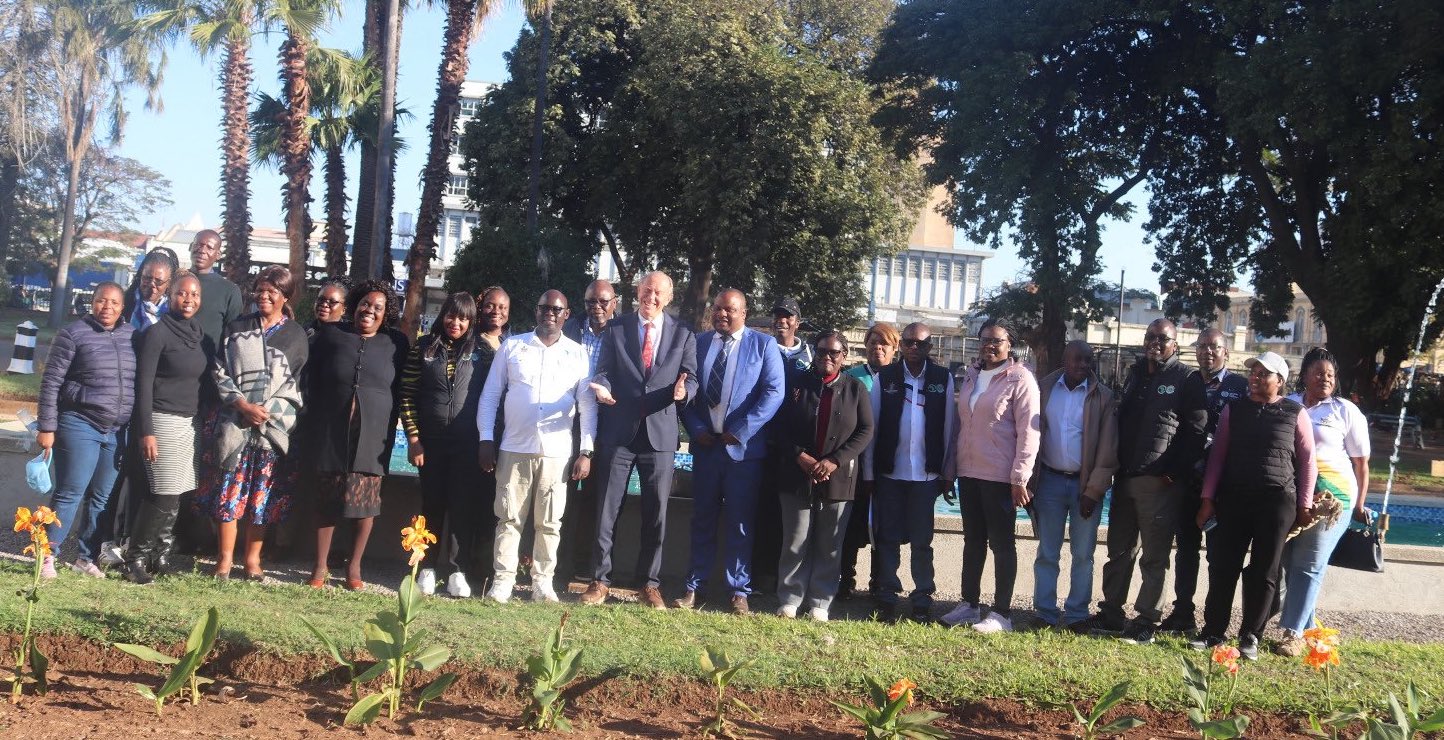
The City of Bulawayo on Tuesday welcomed a Joint Project Completion Mission for the Sustainable Enterprise Development for Women and Youth (SEDWAY) Project and a Supervision Mission for the Skills for Youth and Women Employability and Productivity (SYWEP) Project, both funded by the African Development Bank (AfDB).
The high-level mission brought together officials from the African Development Bank, the Ministry of Women Affairs, Community, Small and Medium Enterprises Development, and the Ministry of Finance, Economic Development and Investment Promotion to assess progress on projects aimed at empowering women and young people through skills development, entrepreneurship and employment creation.
One of the key highlights of the visit was an inspection of the SEDWAY textile manufacturing factory currently under construction at the corner of Basch Street and 11th Avenue in Bulawayo.
The facility, which is being co-financed by the African Development Bank in partnership with the Government of Zimbabwe, has reached approximately 80 percent completion, marking a significant milestone in one of the city’s flagship industrial development projects.
Once completed, the factory is expected to become a major hub for textile production and skills development, providing women and young entrepreneurs with access to modern manufacturing equipment, specialised machinery and technical capacity-building programmes.
The initiative is designed to strengthen Zimbabwe’s textile value chain while creating employment opportunities and promoting sustainable enterprise development.
By investing in modern infrastructure and industry-specific equipment, the project seeks to revive Bulawayo’s long-standing reputation as Zimbabwe’s industrial capital while equipping women and youth with the practical skills needed to participate meaningfully in the manufacturing sector.
The project also aligns with broader national efforts to stimulate economic growth through value addition, industrialisation and inclusive development.
The African Development Bank delegation was led by Mr John Ng’ambi, Senior Education Analyst and Task Team Leader, who outlined the Bank’s vision for the projects. He highlighted AfDB’s commitment to supporting initiatives that enhance employability, strengthen entrepreneurship and improve economic opportunities for women and young people across Zimbabwe.
The mission also paid a courtesy call on Bulawayo Mayor Senator David Coltart, Acting Town Clerk Mrs Sikhangele Zhou, and senior City of Bulawayo officials. During the meeting, council leadership expressed appreciation for the African Development Bank’s continued investment in the city’s development agenda.
Mayor Senator David Coltart commended the African Development Bank for maintaining a strong and productive partnership with the City of Bulawayo.
He noted that the Bank has played a critical role in supporting infrastructure and development projects that continue to improve the lives of residents while strengthening the city’s economic prospects.
The Mayor highlighted the successful implementation of the Bulawayo Water and Sewerage Services Improvement Project (BWSSIP) as one of the notable achievements arising from the partnership between the local authority and the African Development Bank. He also welcomed ongoing negotiations surrounding the proposed construction of the Glassblock Bopoma Dam, describing the project as a strategic investment that has the potential to provide a long-term solution to Bulawayo’s persistent water challenges.
The visit reaffirmed the African Development Bank’s commitment to working closely with both central and local government institutions to deliver impactful development programmes that promote sustainable economic growth, improve livelihoods and expand opportunities for communities.
As the SEDWAY textile factory moves closer to completion, expectations continue to grow that the facility will become a catalyst for industrial revival, innovation and entrepreneurship in Bulawayo. Beyond creating employment, the project is expected to empower women and young people with the skills, technology and resources needed to build sustainable businesses and contribute to Zimbabwe’s economic transformation.
The Joint Project Completion Mission underscores the importance of collaborative partnerships in driving development, demonstrating how coordinated investment by government and international development partners can deliver lasting benefits for communities while laying the foundation for inclusive and sustainable economic progress.