In the Heart of the City: How Sojourners Church Is Reimagining Urban Faith

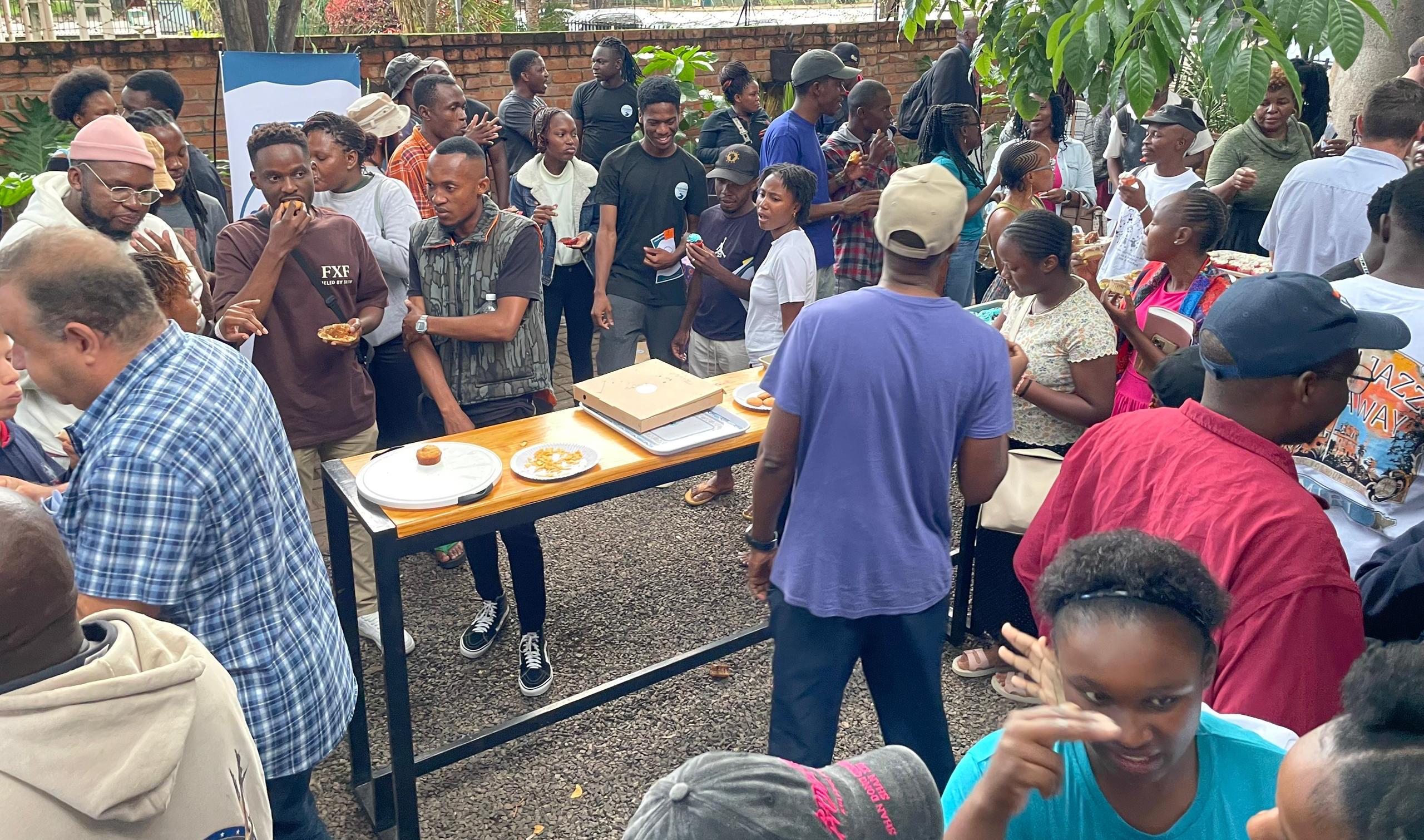
On the evening of January 24, something quietly significant happened in the heart of Bulawayo. Beneath open skies and against the hum of city life, Sojourners Church officially launched at Middys Cafe. It was not a spectacle driven by hype, but a gathering marked by prayer, song, Scripture, and a deep sense of expectancy.
For Winston Coltart, who leads the church alongside his wife Emmy Coltart, the night was less about arrival and more about obedience.
“Sojourners Church is a gospel-centred church plant in the heart of Bulawayo. We are a Bible-preaching, grace-embracing, mission-minded community seeking to see real transformation through the power of God’s Word. We exist to help people see Jesus clearly, treasure him deeply, and live for him boldly, as pilgrims on a journey, not settlers clinging to this world.”
The vision did not appear overnight. Winston grew up in Bulawayo. Emmy first came to the city on a mission trip in 2012, and over time their lives intertwined. After theological training and church residency in the United States, the couple returned to Zimbabwe in 2020 to assist in planting Living Hope Church. In the years that followed, a conviction steadily deepened.
“The greatest need in Zimbabwe is gospel renewal through healthy local churches.”
Zimbabwe is often described as a Christian nation, yet Winston speaks candidly about what he sees beneath the surface. Syncretism. Prosperity teaching. Leader veneration. In that context, planting a church committed to biblical authority and systematic expository preaching felt urgent rather than optional.
There was no lightning bolt moment, no dramatic sign. Instead, there was what he describes as a convergence of conviction. As they looked at the city centre, at its accessibility, at the concentration of students and young professionals navigating both ambition and uncertainty, clarity came. This is where we are meant to labour.
The name Sojourners Church carries that conviction in a single word. To sojourn is to dwell in a land that is not your own. It is the language Scripture uses for believers. Strangers. Exiles. Pilgrims passing through, awaiting a better homeland.
“We don’t overvalue this life, but neither do we despise it. The journey is real, often hard, but full of adventure. Grace sustains us until we reach home.”
In a generation where many young Zimbabweans are told that the only viable future lies beyond the country’s borders, the idea of being a sojourner reframes the narrative. Economic and political instability are real, Winston acknowledges. But seeing life through the lens of a bigger story allows believers to endure suffering and take risks with hope anchored beyond circumstances.
If Sojourners Church were a person, he says, it would be warm, thoughtful, courageous, grounded in truth, serious about Scripture but joyful around the table.
Launch night embodied much of that personality. What stood out most was the warmth. Leaders and members from various churches across the city came to support and pray. The forecast had predicted rain for the outdoor gathering, yet not a single drop fell.
“We felt so seen and so well supported.”
Behind the scenes, the story was less polished. Sound checks ran late. Volunteers carried equipment and stretched tenting into place. Quiet prayers were whispered in corners. A small team bore the weight of a large vision. People later shared how encouraged they were to hear clear, verse by verse Bible teaching and to witness the broader church gathering in unity.
Hosting the launch in a café rather than a traditional church building was deliberate. Meeting at Middys Cafe placed the church directly within everyday urban life. It also lowered barriers for those wary of conventional religious spaces.
“It strips some of the cultural preconceptions about what church is like and enables people to experience church afresh.”
The road to that evening was not without strain. Finances were tight. Logistics were complex. For months, consistent evangelism yielded little visible growth. Building a core team proved harder than expected. Delays accumulated.
“There were lots of delays along the way. But the Lord clearly knew exactly who he wanted to be part of the team and when he wanted the church to be planted.”
Sound equipment had to be purchased. A stretch tent had to be installed. Start up expenses mounted. Yet, as Winston recounts it, provision arrived in time. Now a different challenge is emerging. Growth has begun to outpace the space available, and the search for a larger venue is underway.
Perhaps the most difficult lesson has been personal.
“Church planting exposes your weaknesses. You cannot fake dependence on God.”
Leadership, for the Coltarts, is anchored in three qualities. Servant hearted. Biblically qualified. Accountable. They intentionally guard family rhythms, committing to at least one full day off each week. Ministry, Winston insists, must not consume what it claims to serve.
Volunteers are not an accessory but the lifeblood of a church plant. Shared ownership fuels growth. Those who serve are called to humility, teachability, reliability, and a love for Christ and his Word.
Looking ahead, the ambition is not mere survival.
The long term vision is a mature, self sustaining church that plants other churches and galvanizes the African church toward global missions. In the near term, priorities include strengthening membership, training leaders, deepening evangelism, and moving toward financial sustainability. They pray for new believers, baptisms, raised up elders, and increasing independence.
Success, in Winston’s framework, is not defined by crowd size.
“Faithfulness. Transformed lives. Disciples who disciple others. Numbers matter only insofar as they represent souls.”
Described by many as hip and exciting, Sojourners Church does not equate relevance with trend chasing. Instead, it strives for cultural awareness. Clear branding. Thoughtful music. Serious theology delivered accessibly. Music serves the Word. Art and storytelling illuminate truth rather than replace it.
Beyond Sundays, the rhythm continues through weekly evangelism, one to one discipleship, small groups, and mercy initiatives targeting local communities. The core message remains steady. Grace transforms. Christ is enough. Scripture is authoritative.
For skeptics and the spiritually curious, the approach is simple. Honest conversation. Patient listening. Opening the Bible and allowing it to speak.
On a personal level, the journey has reshaped Winston himself.
“It has deepened my dependence on God and my love for the local church.”
He once feared that no one would come, that they would stand alone. Instead, community has formed around them in ways he did not anticipate.
Ultimately, his confidence rests not in strategy but in sovereignty.
“He builds his church, not us.”
As Bulawayo continues to wrestle with economic uncertainty and shifting cultural currents, Sojourners Church positions itself not as a saviour of the city, but as a participant in a larger narrative.
“Zimbabwe’s story is not finished. Bulawayo is not forgotten. God is still building his church and we are grateful to be small participants in a much bigger story.”