Former Pelandaba–Tshabalala MP Ostallos Gift Siziba calls for technology to advance Africa’s debt justice

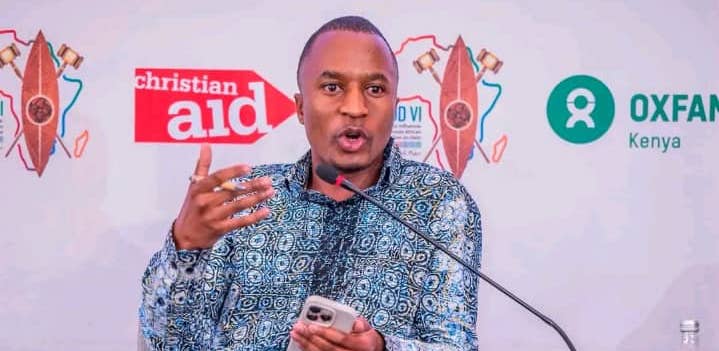
Former Pelandaba–Tshabalala Member of Parliament Gift Ostallos Siziba has joined African policymakers, researchers, civil society leaders and development practitioners in Nairobi for the sixth African Conference on Debt and Development (AfCoDD VI), calling for technology to be placed at the service of debt justice and greater public accountability.
The conference, taking place in Nairobi from 26 to 28 August 2026 under the theme “From Fragmentation to Influence: Advancing the Common African Position on Debt,” comes at a critical period for the continent as African countries seek to translate the Common African Position on Debt into coordinated action.
Siziba participated in a panel examining how technology can help Africa move beyond conventional approaches to debt management towards a broader framework of debt justice.
He argued that Africa’s debt crisis should not be viewed purely through the lens of financial figures and repayment schedules, but also through questions of power, policy space and the continent’s ability to determine its own development priorities.
“Africa’s debt crisis is about more than finance. It is about power, policy space and our capacity as Africans to determine the terms of our own development,” Siziba said.
The former legislator highlighted the potential of technology to improve debt transparency, expand access to information and strengthen public oversight of government and financial institutions.
However, he also cautioned that technology should not be treated as a solution in isolation, particularly within a global financial system marked by significant inequalities.
“We reflected on the opportunities technology presents for greater debt transparency, better access to information and stronger public oversight, while also recognising the risks of introducing new technologies into an already unequal global financial system,” he said.
For Siziba, the central issue is whether technological advancement can translate into greater power for ordinary citizens.
“For us the point is simple, technology must work for people. It must help ordinary citizens, civil society and African institutions understand the decisions being made in their name and give us greater capacity to hold power to account.”
His intervention places technology within the wider African debate about economic sovereignty and institutional accountability. AFRODAD, which convenes AfCoDD, describes the conference as a platform for African and global stakeholders to examine debt and development finance challenges while advancing African-led solutions.
The Nairobi gathering has brought together governments, civil society organisations, researchers, parliamentarians, development finance practitioners and other stakeholders to consider how Africa can strengthen its collective influence over the global financial architecture.
For Zimbabwe, where debt and development finance remain important economic questions, Siziba said the conversation should ultimately be about building stronger national and continental institutions capable of making decisions in the interests of citizens.
He expressed gratitude to AFRODAD for creating a platform where African voices could contribute to debates about the continent’s economic future.
“For us in Zimbabwe, and for Africa as a whole, the work is about building greater agency, stronger institutions and the confidence to determine our own development path.”
Siziba’s participation in the Nairobi conference reflects his continued engagement with questions of economic justice, governance and African development beyond his former parliamentary role. His contribution also comes as AfCoDD VI seeks to move the conversation from diagnosing Africa’s debt challenges towards building collective African influence and practical alternatives.