Solar power gives Zimbabwe’s health system a new layer of resilience

In a hospital, a power cut is more than an inconvenience. It can interrupt an operation, disrupt laboratory work, threaten the storage of vaccines and medicines, and place additional pressure on health workers already dealing with emergencies.
At Victoria Falls District Hospital in Matabeleland North, solar power is helping to reduce those risks.
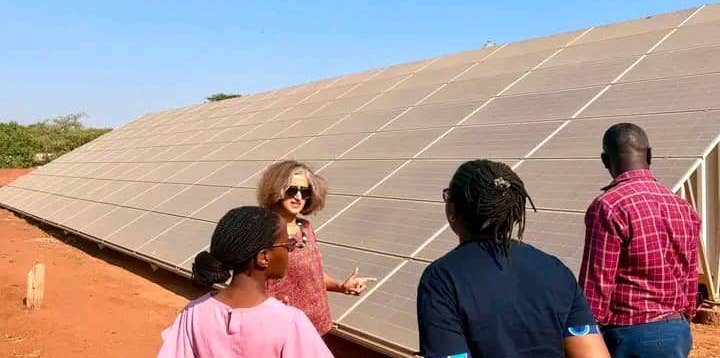
A 40 kilowatt peak hybrid solar system installed at the hospital in 2022 is providing electricity to some of its most critical departments, including the operating theatre, pharmacy, laboratory, maternity ward and mortuary.
The system comprises 120 solar panels and a 115 kWh battery bank, allowing the facility to maintain essential services when electricity from the national grid is unavailable.
For health workers, the change has been significant.
to them It is 24/7.
The installation has replaced a situation in which the hospital had to contend with an unreliable grid, prepaid electricity and a diesel generator that was not always operational.
For a hospital, the consequences of unreliable power can be serious.
Refrigeration equipment used for vaccines and medicines must operate continuously, while theatres, maternity units and laboratories cannot simply suspend their services whenever electricity is interrupted.
Victoria Falls District Hospital is now part of a much broader programme aimed at addressing that vulnerability across Zimbabwe.
More than 1,263 health facilities and medical warehouses have received solar energy systems through an initiative involving the United Nations Development Programme (UNDP), the Global Fund, the Government of Zimbabwe and the Ministry of Health and Child Care. (Source UN/Zimbabwe).
The investment is being implemented under the Resilient Systems Strengthening for Health programme, with solar systems ranging from 5 kWp to 450 kWp depending on the requirements of individual facilities.
The programme has prioritised services where dependable electricity is particularly important, including vaccine cold-chain facilities, laboratories, diagnostic equipment, operating theatres, maternity units, health information systems and communications infrastructure.
In Victoria Falls District, 22 facilities have benefited from solar installations. The wider intervention has also included solar-powered boreholes, improvements to medical storage, vehicles, HIV medicines and laboratory equipment.
The impact is most visible in the continuity of services.
A vaccine refrigerator can continue operating during a grid outage. A maternity ward can remain illuminated overnight. Laboratory equipment can continue functioning, while health workers can respond to emergencies without relying solely on a diesel generator.
However the expansion of solar infrastructure has also raised an important question,how will the systems be maintained over the long term?.
During a visit to Victoria Falls District Hospital on Monday, UN Resident Coordinator in Zimbabwe Dr Rosemary Kalapurakal welcomed the progress but stressed the importance of protecting the investment.
“How do we keep this infrastructure going and being as useful as possible for the future?” she asked.( in a press statement).
The question highlights a challenge facing many infrastructure projects. Installation is only the first stage. Solar equipment requires regular maintenance, technical expertise, replacement parts and effective management.
For Zimbabwe, developing local skills could be particularly important.
Also it was highlighted the need for clear maintenance procedures, stronger facility-level planning and closer cooperation between government, development partners and the private sector.
The sustainability question extends beyond Zimbabwe.
Dr Kalapurakal pointed to international platforms, including the International Solar Alliance, as opportunities for countries to exchange experience on renewable-energy systems, technical training and long-term maintenance.
There are also environmental and financial considerations.
The reduction in diesel-generator use and reliance on conventional electricity is expected to help reduce operating costs while lowering carbon emissions. The national programme is projected to avoid more than 16,000 tonnes of carbon dioxide emissions annually.
For Zimbabwe’s health sector, the significance of the investment therefore goes beyond keeping the lights on.
Reliable renewable energy can strengthen the resilience of facilities, support essential medical equipment and reduce some of the risks associated with an unreliable electricity supply.
At Victoria Falls District Hospital, the transformation is perhaps easiest to understand through the everyday work of the facility.
When the lights remain on in the maternity ward, a mother can receive care without interruption.
When the cold chain remains intact, vaccines can remain safe.
When the operating theatre has dependable power, medical teams can focus on the procedure rather than the electricity supply.
Also when the laboratory continues functioning during an outage, diagnosis does not necessarily have to wait for the grid to return.
Victoria Falls is globally recognised for the extraordinary power of the Zambezi River. At its district hospital, another natural resource is now helping to sustain essential services.
The challenge ahead is to ensure that the solar systems installed across Zimbabwe remain operational long after their commissioning ceremonies are over.
If maintenance, skills development and institutional support keep pace with the investment in infrastructure, solar power could become an increasingly important pillar of a more resilient Zimbabwean health system.